Affiliate disclosure: This article contains commercial referral links. Homzora may earn a commission from qualifying activity. As an Amazon Associate, Homzora earns from qualifying purchases.
Staging should help a prospective buyer understand how a home works. It should make circulation, room purpose, storage, and natural light easier to see. It should not conceal damage or suggest that furniture and decoration compensate for an unresolved building issue. A practical checklist keeps presentation work separate from repairs and required disclosures.
This guide is an editorial preparation plan, not a promise that staging will increase a sale price or reduce marketing time. It does not claim results from a Homzora client study. Adapt the order to your home, schedule, and budget, and ask the professionals handling the sale about property specific requirements. The dollar examples are hypothetical budgeting exercises rather than local contractor or staging quotes.
Begin with a repair and disclosure review
Before buying decor, list known problems and ask which require qualified evaluation. Separate a loose handle from evidence of a leak or an electrical concern. Do not paint over a stain simply to make it disappear from photographs. Understand the cause, document the appropriate work, and discuss disclosure obligations with your adviser.
For older housing, EPA guidance describes lead related disclosure requirements for most homes built before 1978. Source: EPA: Real estate disclosures about potential lead hazards That information should remain part of the sale preparation, regardless of how fresh the rooms look. If planned work could disturb painted surfaces or another potentially hazardous material, use the appropriate qualified professional. A staging schedule should accommodate necessary investigation instead of pressuring someone to take a shortcut before photography.
Set a budget with a stopping point
Choose the total you can spend and divide it into cleaning, small presentation work, storage or moving, and optional furnishings. Keep repair spending separately visible. Otherwise, a budget intended for a rug and lamps can quietly absorb necessary work and leave the household uncertain about what was actually spent.
For illustration, a $1,000 presentation budget might allocate $350 to cleaning, $250 to approved minor touchups, $200 to storage or moving materials, and $200 to optional items. These are invented allocations, not recommended prices. The useful feature is the limit. If a proposed purchase does not solve a clear presentation problem, leave it out. Reusing suitable furniture can be more sensible than furnishing a room again solely for a short marketing period.
Prepare the entrance and first movement through the home
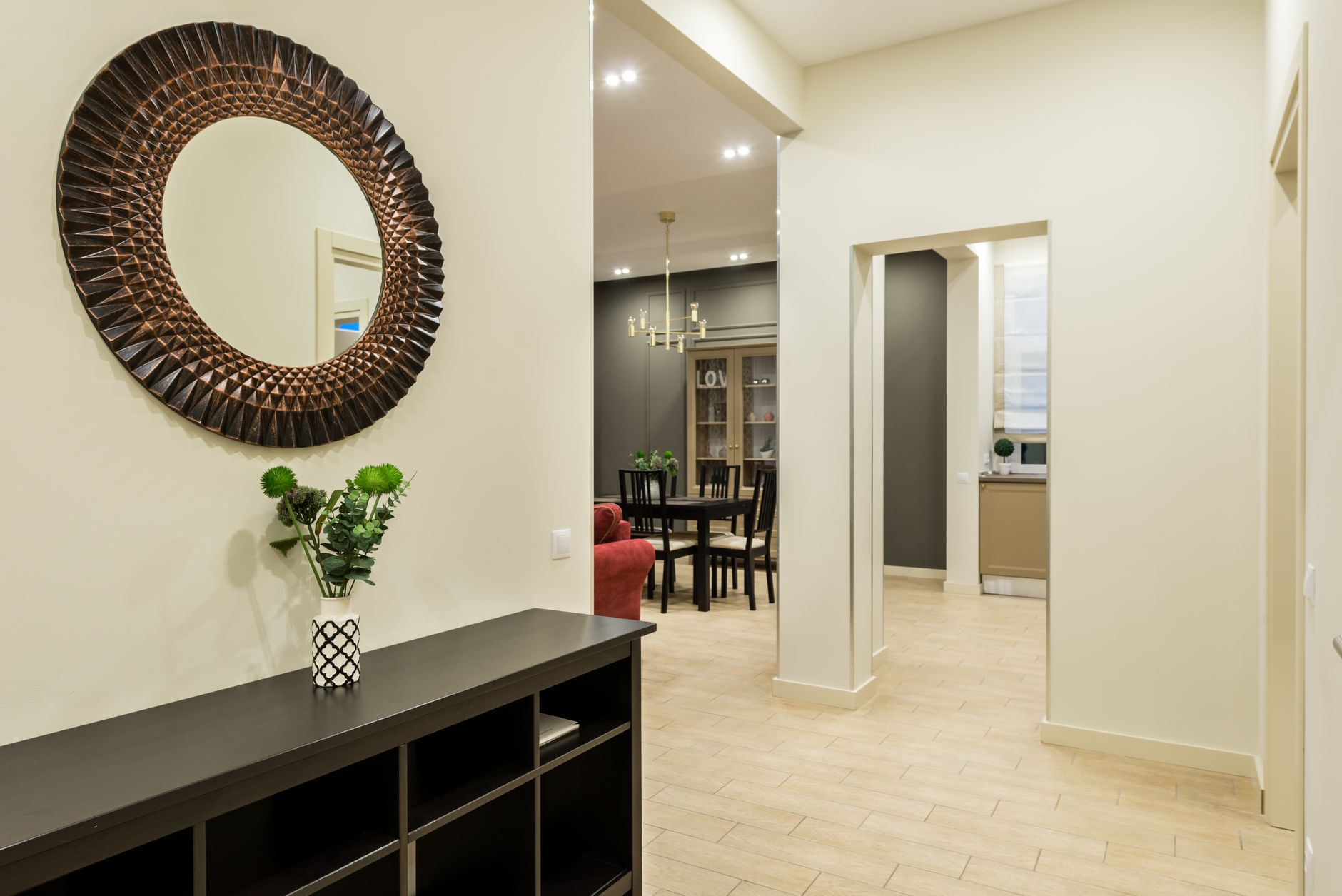
Start at the door a visitor will use. Make sure the route is clear and that doors can open normally. Remove unnecessary belongings from the immediate path and provide a practical place for the items your household still needs each day. Do not move clutter into a common hallway or required exit route.
Look at the entrance from a visitor’s perspective. Can someone understand where to go next? Is the lighting adequate for the visit? Are personal documents or keys exposed? A small, orderly entrance can communicate the layout without decorative excess. If the building has shared access procedures, coordinate showing arrangements with the appropriate person rather than improvising a door policy that affects other residents.
Give the living room one clear purpose
Arrange the living room so its main use is easy to understand. Keep a comfortable route between doors and seating without forcing visitors around oversized furniture. Remove items that block the view of the room’s usable dimensions, but do not make it look unrealistically empty if that obscures how furniture can fit.
Test the arrangement while the household still lives there. If everyone must move a chair to reach a window or outlet, the staging has created a practical problem. Choose a few necessary pieces and store excess belongings elsewhere in an appropriate location. Keep cords managed according to the equipment instructions, and avoid relying on improvised electrical arrangements to power decorative lighting for a photograph.
Make the kitchen easy to inspect
Clean work surfaces and show useful preparation space. Keep only the everyday items you need, and organize cabinets enough that storage can be understood without presenting a false impression of capacity. Do not use containers or props to hide a damaged surface or a problem that should be addressed directly.
Check the presentation from the doorway and from the working area. Remove expired food and unrelated paperwork, and keep cleaning products stored appropriately. If an appliance is included in the sale, discuss its status and any known issue with the professionals handling the transaction. A staged kitchen should make the room legible, not imply that an appliance has been tested or warranted simply because its exterior is clean.
Show bedrooms as usable spaces
Use furniture that helps a visitor understand the room’s likely function and circulation. Make the bed, reduce excess pieces, and keep access to doors and windows clear. Do not label an unsuitable room as a bedroom through staging alone. Ask your agent or attorney how the room should be represented if its status is uncertain.
Keep personal information, medication, and valuable items secured before visits. A room can look calm without exposing the household’s private life. If the space also serves as an office, give the arrangement an understandable purpose rather than packing in every possible use. A prospective buyer benefits more from seeing the actual layout than from an ambitious furniture arrangement that is difficult to move through.
Clean bathrooms without covering evidence
Focus on cleanliness, working access, and a clear view of fixtures. Remove unnecessary toiletries and use a simple arrangement that can be restored quickly after normal use. Address maintenance questions through the appropriate professional rather than masking odors or moisture evidence with fragrances and new accessories.
If a surface requires repair, determine the cause before choosing a cosmetic treatment. Keep records of work completed. Do not describe a bathroom as renovated merely because towels, a mirror, or a shower curtain are new. Buyers should be able to distinguish presentation changes from actual improvements. A straightforward description is more credible and reduces the chance that a staging choice creates a misleading impression.
Treat closets and storage honestly
Organize storage so a visitor can understand its depth, access, and usable space. Remove things you already intend to donate, sell, or move, but do not stuff every room’s clutter into a closet that visitors may open. Keep a consistent labeling system for boxes you will retain through the move.
Measure before purchasing organizers. A container that fits the shelf but prevents a door from closing is not useful. If you need supplies, this optional home organization shopping link opens an Amazon search rather than a tested product recommendation. As an Amazon Associate, Homzora earns from qualifying purchases. Buy only items whose dimensions and intended use match the space; the staging plan should not create unnecessary purchases.
Include basements, utility areas, and outdoor space
Keep access to equipment and relevant inspection areas clear. Do not surround a problem component with boxes or furniture to direct attention away from it. If a space is unfinished, present it accurately. A rug and lamp do not establish that a basement is approved living space.
For outdoor areas, remove unnecessary items and make the intended use easy to understand without blocking drainage, access, or required pathways. Ask a qualified professional about unsafe steps, railings, or other concerns. Avoid work at height that exceeds your ability or equipment. The staging checklist should remain a preparation tool, not an invitation to perform risky repairs quickly before a photographer arrives.
Check lighting and photographs for accuracy
Use available light and suitable fixtures to make rooms readable, while preserving an accurate impression of the property. Replace failed bulbs with compatible products as appropriate and avoid extreme differences in lighting color that distract from the room. Do not use photography or virtual staging to erase a material defect.
If images are digitally furnished, make sure the presentation is clearly identified and does not misrepresent the physical space. Retain an accurate record of the unstaged room. Discuss the final images with the person responsible for the listing. The goal is to show potential uses while allowing buyers to understand what exists now, not to make a narrow room or damaged surface appear fundamentally different from reality.
## Test the home as a visitor would use it
After rearranging furniture, walk the route from the entrance through each room without relying on shortcuts familiar to the household. Check whether doors open properly and whether a visitor can see the room without stepping around unstable items. Ask another person to identify confusing arrangements. Their observations can reveal a simple layout problem without creating a new shopping project.
Before a showing, use a short repeatable checklist for lighting, ordinary cleanliness, personal information, and access. Keep pets and household activities managed according to the showing arrangements. Do not rush important documents into random drawers merely to clear a surface. The preparation should remain manageable over repeated visits, not work only for a single photograph.
A practical routine protects both presentation and the household’s ability to keep living in the home.
Plan the final day and the period of showings
Create a short reset routine that the household can actually maintain. It might include clearing counters, securing personal items, opening appropriate interior doors, and confirming the agreed access arrangement. Keep essential daily items in a designated place so the home remains usable while it is marketed.
Also coordinate required sale preparations separately from staging. Massachusetts provides guidance on smoke and carbon monoxide alarm inspections for a sale or transfer; contact the appropriate local office about the property’s requirements. Source: Massachusetts: Preparing for a smoke and carbon monoxide alarm inspection A decorative refresh does not replace that work. Use the Homzora Boston edition for related ownership material, and finish with a home that is orderly, accurately represented, and ready for meaningful buyer questions rather than merely ready for a photograph.
Sources and further reading
Sources reviewed October 8, 2026. Program rules, product terms and public information can change. Hypothetical examples and editorial checklists are identified in the article.