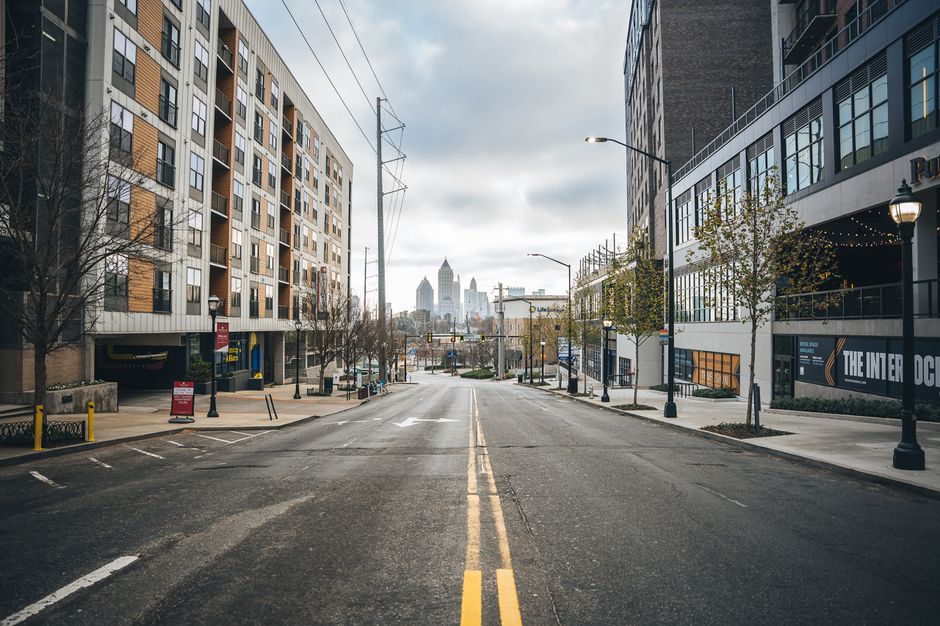
Reynoldstown has the best sourced rent figures of any Atlanta neighborhood we cover. Five independent aggregators publish one and two bedroom figures for it, which is more than we have for Midtown, Old Fourth Ward or anywhere else in the edition.
That does not mean the figures agree. They span several hundred dollars, and the spread is itself the most useful thing on this page. This guide covers what the sources report, what the disagreement tells you, and what to establish before signing.
What the rent data shows
Ranges below span what RentCafe, Apartments.com, Rentable, ApartmentHomeLiving and ApartmentAdvisor collectively report between March and August 2026.
| Unit | Range | Spread | Sources |
|---|---|---|---|
| Studio | $1,520 to $1,802 | $282 | Three |
| One bedroom | $1,657 to $2,127 | $470 | Five |
| Two bedroom | $2,208 to $2,661 | $453 | Five |
A $470 spread on one bedrooms across five sources is wide. Inman Park, with four sources, spans $177. The difference between those two neighborhoods is not that our Reynoldstown research is worse. It is that Reynoldstown’s rental stock is less uniform.
Why five sources disagree by $470
Aggregators measure different things. Some report asking rents on currently listed units, others report signed leases. Some draw broadly including small landlords, others mostly from larger managed buildings. Their neighborhood boundaries differ from each other and from the city’s official ones.
In Reynoldstown there is a specific explanation worth considering. One source reports its listings ranging from roughly $970 at the bottom to well over $10,000 at the top. That is not a market with a typical unit. It is a market containing several different products, and an average of it describes nothing in particular.
A converted older house and a recent purpose built apartment are different propositions at different prices. An aggregator drawing mostly on one will report a different figure from one drawing on the other, and both will be accurate about what they measured.
The practical consequence is that the range is the answer here, not a midpoint within it. Which end applies to you depends on which kind of building you end up in, and that is a question about specific addresses rather than about the neighborhood.
What that means at signing
Georgia caps residential security deposits at two months rent for leases signed or renewed since 1 July 2024, under O.C.G.A. 44-7-30.1. Combined with first month rent, that sets the ceiling on lawful cash at signing.
The wide range means that ceiling varies considerably. At the bottom of the one bedroom range the lawful maximum is around $4,970. At the top it is closer to $6,380. On a two bedroom it runs from roughly $6,620 to $7,980.
Those are maximums rather than typical asks, and many landlords request a single month rather than two. But knowing the ceiling tells you whether a demand is lawful, and a demand above it is not.
Refundable deposits count together toward the cap, so a pet deposit is part of the same two months. Non-refundable fees sit outside it entirely and Georgia does not cap them.
Getting around
Reynoldstown shares a MARTA rail station with Inman Park, on the Blue and Green lines. That puts it on the east west axis.
A journey to somewhere on those lines is direct. A journey to a Red or Gold line destination routes through Five Points, the only station where all four lines meet, which adds distance even when the two points look close on a map. The useful question when assessing a neighborhood is not whether it has a station but whether your destination sits on the same line.
A MARTA thirty day pass is $95, and a single trip is $2.50 regardless of distance or mode. A single fare stays valid for three hours and permits up to four free transfers including between bus and rail, which makes a connecting journey cheaper than most people assume.
For a five day commuter the pass is the ceiling on transport cost and pays for itself at 38 trips, which a standard commute passes in the first three weeks.
We do not publish commute times, because door to door journey time depends on walking distance, waiting, transfers and time of day, none of which we have measured. Make the actual trip at the actual hour before signing.
The BeltLine, and what it changes
Reynoldstown sits on the Atlanta BeltLine Eastside Trail, and trail proximity is part of what the rent reflects.
Worth being clear eyed about it. Trail access genuinely changes how you move around the eastside without a car. It also brings foot traffic, weekend noise, and parking pressure that varies enormously between a Tuesday morning and a Saturday afternoon.
Anyone touring here on a weekday should walk the same block again at the weekend. A street near the trail is a different street depending on when you are standing on it, and a scheduled afternoon tour will not show you that.
Housing stock and what to check
Given what the rent spread suggests about the variety of housing here, the questions that matter depend heavily on which kind of building you are looking at.
In an older or converted property, check the cooling system first. Atlanta summers make air conditioning functional rather than optional, and a system that has not been tested under load tells you nothing on a spring tour. Ask its age, who maintains it, whether the unit has had a failure and how quickly it was resolved.
Then water. Run the shower for two full minutes and watch the drain rather than the pressure alone. Run the kitchen and bathroom faucets together. Look under every sink at the base and the back wall for staining, warped board or fresh sealant around a joint. A patch of fresh paint on a ceiling near a bathroom is often a repaired leak worth asking about.
Open and close every window, since painted shut windows are common in older stock and matter for ventilation as well as escape. Count the outlets in each room.
In a newer building, the questions shift to what the monthly figure includes. Parking, pet rent, amenity fees, valet trash, mandatory insurance and utility administration charges recur monthly and any of them can add a hundred dollars to a rent that looked competitive. Ask for the total that will appear on your statement.
Before you sign here
- Ask which end of the range this unit sits at and why. With a $470 spread, that question has a real answer, and a property at the top should be able to explain what you are paying for.
- Ask for the written list of existing damage before paying any deposit. Under O.C.G.A. 44-7-33 a landlord subject to the formal deposit rules who fails to provide one forfeits the right to retain any part of the deposit.
- Establish whether your landlord is an individual owner or a management company. An individual owning ten or fewer self managed units is exempt from the escrow and inspection requirements, though not from the cap or the thirty day return deadline. Given the mixed stock here, both are common.
- Separate refundable from non-refundable in the move in cost before comparing properties.
- Read the late fee clause. Georgia sets no cap and requires no grace period, so the lease governs entirely.
- Walk the block at a different hour than your tour, particularly near the trail.
How to read these figures
The ranges here span what five named aggregators report. They are not survey findings, not confidence intervals, and not predictions of what any particular unit will cost. Where sources disagree by a wide margin we publish that disagreement rather than narrowing it, because narrowing it would imply a precision the underlying data does not support.
Aggregator figures skew toward units those platforms list, exclude concessions, exclude fees, and represent a snapshot rather than a trend.
Homzora has no Atlanta survey data yet, which is why no neighborhood satisfaction score or demand index appears in this edition. When responses have been collected, those figures will be published and clearly labeled as survey derived.
The underlying data is free to download, with sources recorded per row, at why neighborhood averages mislead and our Atlanta datasets.
Homzora Housing Intelligence · Atlanta edition
Rent figures are compiled from published third party sources and are not survey findings. References to Georgia law summarize published statutory provisions as of September 2026 and do not evaluate any particular lease. Consult a Georgia attorney or a housing assistance organization for advice on your own situation.
Homzora is a housing research platform. It is not a licensed real estate brokerage, a property manager, or a law firm.
